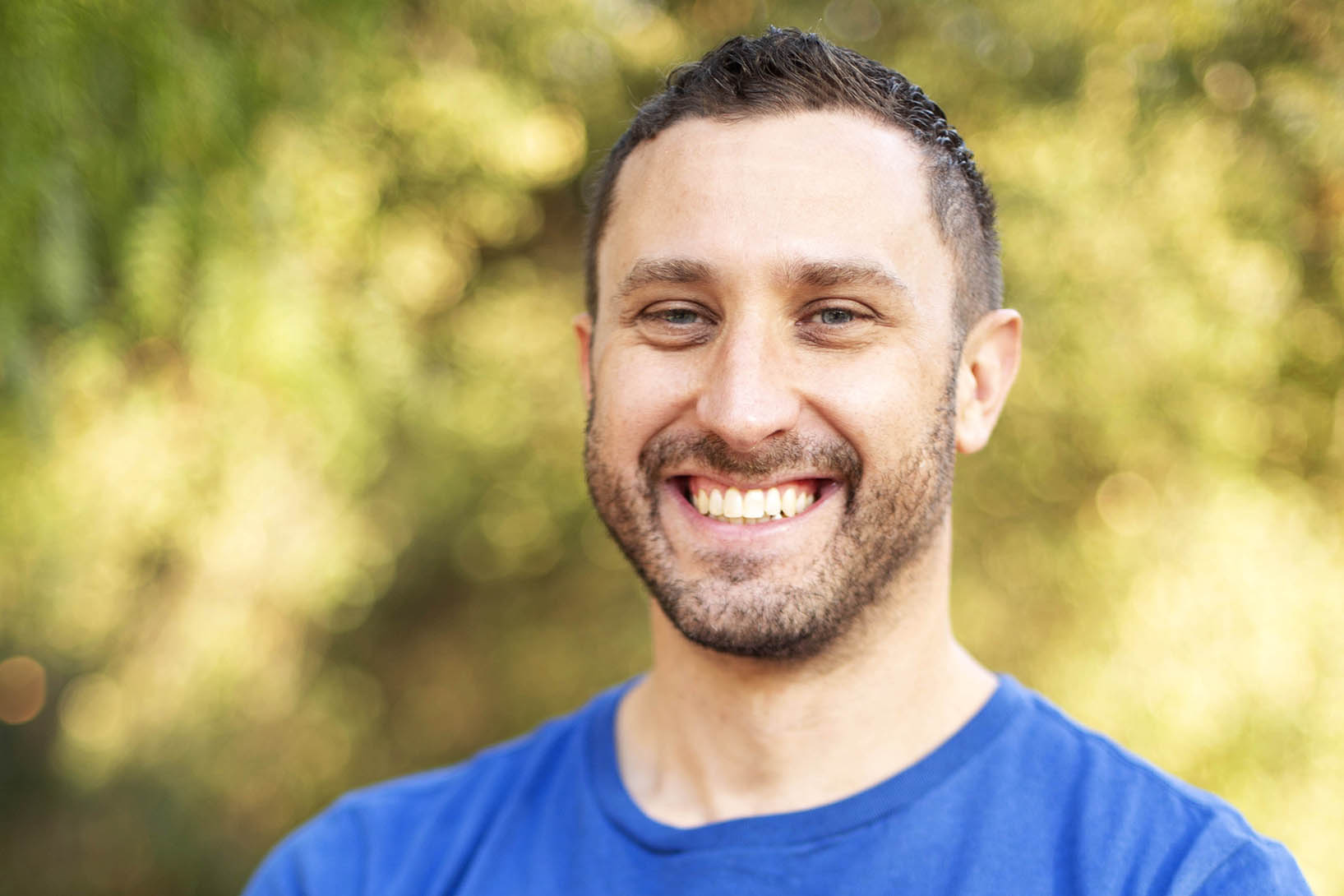
I’m Hank Leukart. Google Product Manager by day. Filmmaker by night. I ship consumer features in Gmail used by 2.5 billion people, and I direct adventure films when I'm not.
Before
I’ve spent my career at the intersection of media and technology: bridging Product Management roles at Microsoft and Google with a 15-year career in between as a TV producer and filmmaker for networks like CBS, Amazon, and Discovery. My work is driven by a central belief: technology is the architecture of modern storytelling. Whether I’m leading a crew through a Fijian jungle for Amazon Prime’s World’s Toughest Race or guiding engineering teams to ship features for 2.5 billion Gmail users, my “product” is the same: an experience that helps people connect to what matters to them most.
Now
At Google, I translate complex visions into massive-scale consumer products. With a background in film, I naturally view user journeys as narratives rather than just data points, closing the gap between technical specs and genuine human experience. Beyond product roadmaps, I'm still a filmmaker at heart, directing documentaries on everything from NASA-driven education for the underserved to the politics of environmental conservation. I thrive in complex, messy environments, a resilience I picked up while navigating the logistics of 400-mile expedition races and surviving the occasional scorpion sting in the Sahara.
Next
I'm currently focused on the combination of AI-driven consumer technology and storytelling, always looking to build something that seeks to entertain, connect, or inspire at scale.
HOriginal • Next-Gen Video AI
SherpaEdit AI
100% MatchTV-MA4K
I built an AI film co-editor that transforms raw footage into a story-driven rough cut, while keeping you in full creative control.
specialized story agents working together to create a story arc
100%
processing on device with no cloud uploads.
100s
of hours of footage distilled into a rough cut
What It Does
Your AI assistant editor. You direct the story. SherpaEdit does the heavy lifting.
SherpaEdit handles the two most tedious phases of the edit: archaeology and the rough cut. It’s built to work with you, taking your creative input and doing the manual labor so you can focus on the craft.
Skip the footage archaeology
Hand over terabytes of raw footage and get back an organized, searchable picture of everything you shot. No more scrubbing through hours to find the moment you remember.
Your media stays private
The heavy analysis happens on your own machine, so your rushes never leave the building and you skip slow, costly cloud uploads.
A rough cut shaped by your vision
SherpaEdit doesn’t make story decisions in a black box. You collaborate with the AI to refine a genuine story arc, and it lays down the strongest dialogue and matching B-roll based on your direction.
Ready to open in your edit software
Everything arrives as an editable Premiere, Final Cut Pro, or Avid sequence. The groundwork is done, leaving you in total creative control to refine and polish the edit.
Under the Hood
I built SherpaEdit AI to tackle the manual drudgery of documentary and video editing — with the mission of preserving the human element of storytelling. It acts as an intelligent assistant editor that executes your creative vision. The pipeline breaks the job into four steps:
1. Ingests & analyzes, entirely on-device
Sending terabytes of video to a frontier LLM is far too expensive, so the heavy lifting happens locally. For every clip, analyze_clips.py builds a structured JSON manifest using local models: WhisperX for transcripts, pyannote for diarization, and Moondream to describe the visuals.
The result is a single manifest an LLM can read to pick A-roll lines and matching B-roll shots — without ever needing access to the actual video files.
2. A multi-agent system, guided by you, proven with thorough AI evals
A single general-purpose prompt produces shallow story arcs. Instead, I built a multi-agent system that works with any frontier LLM (Claude, Gemini) that acts like a team of specialized assistant editors working under your direction:
A Story Agent proposes an arc, which you refine through a direct conversation to match your vision.
The A-Roll Agent selects precise narration and dialog based on that agreed narrative.
The B-Roll Agent adds matching visuals while avoiding repetition.
The Quality-Check Agent reviews pacing and flags amateur editing mistakes.
I first devised this approach based on intuition, then tested it using the evals I built in “Can frontier AI models make documentary film editorial decisions?” My experiment showed that a single agent can be very good at judging whether a clip fits when it has the surrounding context, but that shaping a good story arc from scratch requires a more thoughtful multi-agent engineering design.
3. Assembles the rough cut
With the arc decided, the agents lay down chosen A-roll and a layer with matching B-roll, automating the initial assembly that an assistant editor or story producer would normally have to do by hand.
4. Hand off to the editor
The assembly is delivered as a real, editable timeline. SherpaEdit completes the first two manual steps with you, so you can spend your energy on the actual craft of editing.
Built With
Python
WhisperX
pyannote
Moondream
Gemini
Claude
Final Cut Pro
Premiere
HOriginal • Wild Desert Odyssey
Echoes of the Escalante
95% MatchFestival SelectionTV-144K
A challenging 65-mile packraft trip on the remote Escalante River in the Grand Staircase-Escalante National Monument.
We launched our packrafts onto the Escalante River with a simple goal: to experience and film 65 miles of Utah’s most untouched and magnificent backcountry. For five days, we drifted through towering red rock labyrinths, severed from the outside world. But what we brought back was a time capsule of a landscape on the brink of erasure.
Following President Trump’s July 2026 executive order that slashed Grand Staircase-Escalante and Bears Ears to less than 10% of their original size, the canyons we paddled have become the epicenter of a bitter legal battle between conservation and industrial extraction. Led by a coalition of Native American tribes and environmental groups, the fight will ultimately decide the survival of the Antiquities Act and the future of America’s public lands.
2026 Festival Screenings
Chagrin Documentary Film Festival: Friday, October 9, 2026 at 11:00am at Methodist Church, 20 S. Franklin St., Chagrin Falls, Ohio
Chagrin Documentary Film Festival: Saturday, October 10, 2026 at 2:00pm in Triangle Park, Chagrin Falls, Ohio
HOriginal • Legendary Camino Quest
To the End of the World
1.03M ViewsViral HitTV-MA4K
Hiking the 540-mile Camino de Santiago across Spain with an inspiring group of friends.
Pilgrims wait in line in Saint-Jean-Pied-de-Port, France to obtain their pilgrim’s passport before beginning their trip on the Camino de Santiago.
Caroline, a 24-year-old South African, and I have been together on the sidewalk in front of the train station in Bayonne, France, for three hours, waiting for a bus to take us to Saint-Jean-Pied-de-Port, France, a traditional starting point for the 870-kilometer (540-mile) historic pilgrimage across Spain called the Camino de Santiago. We’re watching as droves of other pilgrims (as Camino walkers are called) from all over the world arrive at the station, hoping to be transformed and inspired by a trek considered by many to be as much of an inward journey as a physical one.
Admittedly, Caroline and I, not having (yet?) reached the Zen state promised by our upcoming Camino, are judging the people who pass by us a little bit. Maybe a lot.
“Is that woman seriously going to hike 500 miles in jeans?” I wonder. “I helped her with her backpack on the train, and it weighed almost half as much as her.”
“Did you see that guy had made his own walking stick?!” Caroline asks.
“Wow,” I respond. “That’s a real man. Mine were made in a factory.”
To be honest, even Caroline looks like she’s likely to die during her first day on the Camino. She’s carrying a big cardboard box filled with who-knows-what, her backpack is overstuffed, and she’s wearing boots better suited for a night out at a posh club in Paris than a 500-mile hike. Many people walk the Camino with a specific goal in mind, hoping to process a recent misfortune or make a big life decision, but, as Caroline and I talk, it becomes clear that the two of us haven’t given much advance thought to why we want to walk the Camino.
Pilgrims eat breakfast at an albergue in Saint-Jean-Pied-de-Port, France before beginning their walk on the Camino de Santiago.
Pilgrims eat breakfast at an albergue in Saint-Jean-Pied-de-Port, France before beginning their walk on the Camino de Santiago.
“I’ve done hikes all over the world, and I’ve wanted to do this one for a long time,” I tell her. “I managed by some miracle to carve out enough free time, so here I am!”
“I just decided to do this four days ago because I realized I have nothing better do to with my life right now than travel the Camino,” Caroline explains. “I was traveling around Europe with a friend, but she had no interest in doing this.”
While we’re talking, another young woman sits down next to us on the sidewalk. She tells us that she’s a 24-year-old medical student from Denmark named Amalie, and I experience déjà vu. I’m reminded of my first day of college and its rare storm of social perfection: a large group of people coming together with similar aspirations, uniquely open to empathizing with strangers and meeting new friends.
A sign warns Camino de Santiago pilgrims of the dangers of attempting the difficult Napoleon Route leading through the French Pyrenees.
A sign warns Camino de Santiago pilgrims of the dangers of attempting the difficult Napoleon Route leading through the French Pyrenees.
“Did you see that guy over there?” Amalie asks, pointing to homemade-walking-stick guy. “He told me that he just returned after walking the Camino in both directions.”
“1,000 miles?!” I say. “That’s crazy. Why would anyone want to do that?” But I realize that my logic isn’t totally sound, considering that walking the 540-mile Camino twice is only marginally crazier than my plan to walk it once.
After a short bus ride, Caroline, Amalie, and I arrive in Saint-Jean-Pied-de-Port with about 100 other pilgrims, and we jump into a long line outside an office issuing credenciales, a special passport which allows hikers to use the Camino’s network of hostels (known as albergues). Afterward, we wander around looking for empty beds, but we’ve arrived in town late because our bus was overbooked by 20 people (no, I have no idea how this could happen either) and we had to wait for a second one. Eventually, Caroline and Amalie find beds at hostels down the street, but I’m left stranded for awhile until I eventually discover a single bed remaining at a pleasant albergue in the midst of serving a family-style dinner. The owner seats me next to Amanda, a 45-year-old South African — whom I recognize from earlier in the day as the jeans-wearing woman with the ridiculously heavy backpack — and Katie, a 27-year-old American ex-lawyer from Virginia.
Sheep watch as pilgrims hike the Camino de Santiago through the French Pyrenees.
Sheep watch as pilgrims hike the Camino de Santiago through the French Pyrenees.
“I hated my job, so I quit,” Katie tells me as we wolf down bean stew together. “I’m going to school later this summer to change careers and move into publishing, so this was a perfect time for me to do the Camino.”
In the morning, with my backpack weight hovering just above 9 kilos (20 pounds) — I’m embarrassed that I didn’t have the discipline to leave my electronics and board games behind — I climb a hill to visit the town’s citadel and then begin the first stage of the Camino called the Napoleon Route, a notoriously-punishing 25-kilometer (15-mile) day with an 1,250-meter (4,100-foot) elevation gain over the Pyrenees mountains. I hike through rugged, tree-covered mountains with lush, green fields dotted with chocolate-colored horses and strangely orderly lines of cream-colored sheep. Near the hike’s high-point, the wind becomes so strong that some smaller, older pilgrims don’t have the strength to push forward against the ferocious winds, and I see a small, overwrought woman screaming at her husband.
Camino de Santiago walkers make their way through the French Pyrenees on the infamous Napoleon Route.
Camino de Santiago walkers make their way through the French Pyrenees on the infamous Napoleon Route.
“You need to fucking wait for me!” she yells. “You don’t understand how fucking strong the winds are! Stop going ahead of me!”
It’s clear that the the Camino’s alleged transformative powers don’t necessarily kick in on the first day, I think. They’ll never make it 500 miles together. I stop to eat a sandwich that I packed for myself and, then, falling into a post-lunch food coma, I promptly fall asleep in the middle of a grassy field near a flock a sheep. An hour later, I wake up, confused that I’m not in my bed in Los Angeles. Oh, it’s the French Pyrenees, I realize. I guess I need to keep hiking.
When I finally reach Roncesvalles (the next major stop on the Camino), I walk past rows of pilgrims who look like people who thought that had signed up for beginners’ yoga class but were unexpectedly sent instead through Navy SEAL training. My mid-day nap in the Pyrenees put me hours behind most of the other pilgrims, and all of the albergue beds have been taken, but the hospitalero gives me space on a bunk bed in a bathroom-sized modular trailer with seven women. After a communication-challenge dinner with a Japanese guy who speaks neither English nor Spanish fluently, I wander through the common area of the albergue and find Katie, who now looks more like someone who accidentally fell asleep in a tanning bed for a week than someone who spent a single day hiking through the Pyrenees.
Stop sign graffiti in Spain encourages pilgrims walking the Camino de Santiago.
Stop sign graffiti in Spain encourages pilgrims walking the Camino de Santiago.
“Uh, maybe try sunscreen next time?” I say to her. She smiles and introduces me to Grant and Ashley — a young married couple from Australia’s Norfolk Island — and Ashley’s mother, Mosta.
“You can remember it because it’s like ‘monster’,” Grant says. Hiking 500 miles with your wife and mother-in law sounds like a dangerous project, I think. Katie tells me that the three Australians are deeply religious and that they’re hoping to move closer to God on the Camino.
The next morning, feeling unclear about why I ever thought a 500-mile hike across Spain would be a good idea and why anyone would think that God would endorse the torture of daily 15-mile walks that start before sunrise, I begin walking at 6:00 AM to coincide with Katie’s group’s schedule. The four of us walk along forest paths lined with oak trees and through quiet Spanish towns. As we walk, Katie tells me that she spent time working for an NGO in Tanzania, and we find ourselves discussing some of the best books we’ve read about Africa, including King Leopold’s Ghost, a harrowing depiction of Belgium’s colonization of the Congo. I realized that I’m already absorbed by the diversity and depth of the people on the Camino.
People fill the streets of Pamplona, Spain on a Saturday evening.
People fill the streets of Pamplona, Spain on a Saturday evening.
Around noon, we arrive in the small town of Zubiri. I’m relaxing at a cafe, eating a huge meal, when Amalie (from the Bayonne train station) appears with a Hungarian girl named Kate in tow.
“We’re heading to the next town, but I thought we should stop to have some sangria with you first,” Amalie announces as the two sit down at my table. The sangria flows fast, and we quickly fall again into a discussion of why we’re doing the Camino.
“I need to figure out what God wants me to do with my life,” Kate explains.
“After my radiology internship ended, I had a lot extra time for watching Netflix, and I saw [the film starring Martin Sheen about the Camino de Santiago] ‘The Way,’” Amalie says.
“So, basically, you’re doing the Camino because of Netflix,” I quip.
“I supposed you could say that, though I also need some time away to decide on my medical specialty,” she says.
The next morning, Katie, Grant, Ashley, Mosta, and I hike toward Pamplona, and we spend much of the time ranking our favorite animated Disney movies. I argue for The Little Mermaid and Wall-E, Katie likes Lilo and Stitch and Mulan, and Grant thinks the whole conversation is ridiculous. In the small hamlet of Zuriáin, an 18-year-old German kid named Kai catches my eye because he’s carrying two heavy backpacks, one clipped to the other on his back, pulling hard on his shoulders.
Bunk beds fill the Jesús y María albergue in Pamplona, Spain.
Bunk beds fill the Jesús y María albergue in Pamplona, Spain.
“You’ve got to get rid of one those, man,” I tell him. “Your shoulders are going to fall off.” He tells me that he’s doing the Camino as part of a gap year before starting a technical college. We walk together toward Pamplona, as rolling wheat fields turn into small towns which turn into suburbs which turn into the sidewalks, sewer grates, and lampposts of a major city. I’m hypnotized by the unique experience of this walk — an urban hike where travelers can watch countryside turn slowly into a city before their eyes. Kai and I catch up to Katie, Grant, Ashley, and Mosta in a city park, where we feast on baguettes and serrano ham that Grant has been carrying in his backpack. Afterward, the six of us check into Jesús y María, a huge municipal Pamplona albergue, built in an old church with 60-foot-high ceilings and over 100 bunk beds. Wandering among the sea of beds, I find Amelie again, who has befriended a 17-year-old British kid named Harry (not Potter) and a 64-year-old Canadian eccentric, with an affinity for making balloon animals, named Brock.
Pitchers of sangria sit on a table at Cafe Iruña in Pamplona, Spain.
Pitchers of sangria sit on a table at Cafe Iruña in Pamplona, Spain.
With her help, I round up nearly everyone I’ve met on the Camino so far: American, sunburned Katie; Danish, Netflix-obsessed Amelie; German, two-backpack-wearing Kai; Australian newlyweds Grant & Ashley with mother-in-law Mosta; British Harry (not Potter); and Canadian balloon-animaler Brock. We walk to Pamplona’s large city square and collapse into chairs at a table at Cafe Iruña. We’ve hiked nearly 70 kilometers (43 miles) so far. Our bodies aren’t used to walking so much, our social batteries are drained because we’ve met so many new people, and we can’t manage to stuff enough food in us to fuel the madness. But, pitchers of Pamplona’s deep-red, sweet, citrusy sangria never seem to stop coming. We laugh and learn and share, and it feels like it’s the first day at the world’s most eclectic college.
I look around at everyone, and I feel a strong ache of regret. At this moment, I can’t think of a single good reason why it took me so long to end up here. There’s nothing that could have been more important than undertaking an epic walk across Spain with this motley crew of beautiful, compassionate strangers.
HOriginal • High Sierra Film
The John Muir
107K ViewsFestival SelectionTV-PG4K
Some people think John Muir was a hero. Others, not so much.
Every year, brothers Brian and Hank Leukart meet somewhere in the world to take on an epic adventure. When they set out — well past the end of the summer hiking season — to hike the 211-mile John Muir Trail (a.k.a. Nüümü Poyo), they find themselves up against a slew of unexpected physical and psychological challenges. As they make their way across the Sierra, they discover that conservationist John Muir’s legacy isn’t as straightforward as they once thought, prompting them to reevaluate their fundamental assumptions about environmentalism and mankind’s relationship to the natural world.
After I directed the film Bears Ears — which tells the story of Native Americans in Utah fighting for federal protection of their ancestral lands — I was inspired to continue telling stories of indigenous people native to the land that I hike through regularly. The fascinating, undertold story of California’s Native People in the Sierra inspired me and my brother to make this new film about our thoughtful trip on the John Muir Trail.
HOriginal • Middle-Earth Adventure Series
The Neverending New Zealand Story
94% MatchTV-PG4K
Heading out on an epic hiking and paddling adventure across New Zealand's South Island.
A packraft sits on a shoreline in Mahau Sound, New Zealand.
I would never recommend trying to use a packraft to paddle New Zealand's Marlborough Sounds to anyone, I'm thinking, as I paddle furiously but futilely across Blackwood Bay, facing a brutal 20-knot (37-kilometers per hour) headwind. This may be the worst adventure idea I've ever had.
For the past six months, I had been dreaming of tackling an authentic adventure by myself -- one that would test me both physically and mentally and allow me to make use of my backpacking and paddling experience. After some brainstorming and extensive research, I decided that a two-month, self-powered trip across New Zealand's South Island would be an excellent choice for my walkabout, due to the island's natural beauty, difficult terrain, and extensive network of lakes and rivers.
A paddler admires Queen Charlotte Sound, New Zealand from a packraft.
A newly-built, Appalachian Trail-like, 3,000-kilometer backpacking trail called the Te Araroa spans the length of New Zealand, and I started planning my trip using the trail as the backbone of my route, then modifying the path as necessary to allow me to explore more remote areas and follow natural waterways with my packraft, a small inflatable boat designed to fit into a backpack. Southbound Te Araroa hikers on the South Island begin at a small harbor in the far northeast called Ship Cove, which seemed like an obvious place for me to begin my cross-island traverse. But, when I looked at the intricate map of the Marlborough Sounds, I realized that I'd much rather paddle the Sounds than hike them, giving myself the freedom to explore the bays.
So, after flying for 21 hours from Los Angeles to Christchurch (the South Island's largest city), driving four hours to Picton (the Marlborough Sounds' primary port), and taking a 90-minute water taxi to Ship Cove, I pulled a packraft out of my backpack, inflated it, and jumped into the water.
My first day on the Queen Charlotte Sound unfolded just as I imagined it might when I was poring over New Zealand topo maps in my Los Angeles apartment. The sea was calm, and though my arms quickly barbecued and my almond-white-chocolate snack mix melted into a messy goo under New Zealand's relentless sun -- the ozone layer over the country is particularly thin -- I had little problem paddling close to six kilometers per hour through Endeavour Inlet. Occasionally, I stopped paddling completely to relax, gazing out over the unfathomably aqua water, watching grey-blue spotted shags (birds) walk along rocks with their funny orange feet, and taking covert photographs of lazy, brown seals napping on rocky, rugged shorelines. In the early evening, I paddled into a primitive campsite in Ratimera Bay, where a middle-aged New Zealander and his wife appeared immediately from their tent to look at my raft.
A packraft sits on a shoreline in Mahau Sound, New Zealand.
"Are you sure that thing is seaworthy?" the man asked. And, then, without waiting for an answer, he offered, "Have you seen those big brown birds? The weka? Watch out for them -- they'll steal anything."
He was right. After falling asleep in my tent, I awoke at 3 AM to the sound of someone rummaging through my gear, only to catch a glimpse of a weka bird running off with a plastic bag. In the dark, I tried to chase the bird, but it ran into the dense forest, where I quickly tripped on a fallen log, allowing the bird to escape. Upon returning to my tent, I discovered that my half-eaten bag of precious white chocolate goo had been stolen.
Now, only five hours later, as I paddle frantically against a 20-knot headwind with a GoPro camera strapped to my head, I'm learning why a packraft is not always a great substitute for long, streamlined sea kayaks. On top of the front of my raft, I've tied my large backpack, which, on the ocean, acts like a bulky, immobile sail. While having a "sail" on the raft can sometimes prove useful in tailwinds, paddling forward with a strong headwind is nearly impossible. Even though I'm paddling hard, I'm being pushed backward by the strong wind. When I lean back to recover for a few minutes, the GoPro falls off my head, and, before I have time to react, it immediately sinks to the bottom of the deep ocean. My frustration turns into fear when I start wondering if the wind is going to push me out to sea, making any place that I could camp for the night inaccessible.
A spotted shag (bird) sits on a rock in Queen Charlotte Sound, New Zealand.
Stay calm, I think. There's no way I'm going to make it to Mistletoe Bay tonight, but maybe I can camp on a nearby beach until the wind dies down. I look at the maps on my GPS device and notice a possible campsite that's not too far away. There, I realize, I could wait out the windy conditions until the next day. Then, while my spray skirt is detached, without warning, a large wave tumbles over my boat and partially fills it with water. I notice that my "dry bag," which contains warm clothes and my headlamp, hasn't lived up to its name and is also now filled with water.
A seal sleeps on the shore in Queen Charlotte Sound, New Zealand.
Despite the strong wind, I manage eventually to get to the bay with my new campsite choice in the early evening, having completed only half of my planned distance for the day. As I slowly muscle my way into the bay, I pass an anchored sailboat with a man standing on the bow.
"How you goin', mate?! That's quite a craft you have," he yells. "Once you're all set up, why don't ya come aboard for a drink?"
So, after doing my best to secure my belongings tightly in my pack to foil the weka birds, I paddle out to the sailboat where I meet Steve, a fireman, and his wife Kim, a special education teacher, both of whom live in Wellington on New Zealand's North Island. Steve gives me a beer and a big bowl of chili, and Kim asks me why I'm out paddling the Marlborough Sounds by myself.
"My brother doesn't have enough vacation time to do a trip this big, and my girlfriend and I broke up last year," I say. "She wouldn't have been into this anyway."
"Well, look for someone with a good heart," Kim suggests, glancing at her husband. "That's what you need."
As I get ready to go to sleep later, I'm disappointed to discover that my headlamp no longer works, having been destroyed by ocean water. Thankfully, the sea is much calmer when I wake early the next morning, and my paddle to Mistletoe Bay is straightforward. When I arrive and set up camp, I chase off a couple weka birds, vigilantly protecting my gear and supplies, though I manage to pour boiling water all over my knee while making dinner. It's hard to stay disciplined and do everything right when you're constantly exhausted and living out of a bag.
The sun sets over Kumutoto Bay in Queen Charlotte Sound, New Zealand.
Yet, in the morning, despite the planning and execution mistakes of the trip so far, I remember why I've chosen to carry a packraft during this adventure. Because the Queen Charlotte Sound doesn't reach Havelock, my target town for the end of this stage of my trip, I deflate my raft, attach it my backpack, and hike over the hills separating Queen Charlotte from Mahau Sound. When I reach the sea again on the north side, I pull my packraft back out of my pack, inflate it, and get ready to start paddling again. It's a simple trick, but a magical one nonetheless.
Mahau Sound is one of the most beautiful places I've paddled in my life: the water looks like oxidized copper, the lush hills look covered in emeralds, and the wind is nearly still. My paddle is mostly a serenity exercise until, about 5 kilometers away from Havelock, a strong wind begins again. This time, though, it's a tailwind. On the way into Havelock, I use my paddle only as a rudder while the wind pushes me toward the town. I'm only 500 meters from Havelock's shore, when I see that I must execute a 90-degree turn and then paddle perpendicular to the wind.
An unhelpful sign directs hikers in Mistletoe Bay, New Zealand.
The wind is so strong, though, that, as soon as I make the turn, the wind takes hold of my boat and pushes me sideways, marooning me on a long sand bar just 300 meters from the shore. I try to paddle off the sandbar, but the wind has pinned me on the beach.
Fine, I think, petulantly. I'll just sit here until the wind dies down. But, after sitting for 20 minutes, embarrassed about how I must look -- an incompetent idiot sitting on a raft marooned on a sandbar just minutes away from shore -- it becomes clear that the wind has no plans to stop any time soon. I decide to get out of the raft, put the backpack on my back, and carry the raft to the end of the sandbar near Havelock's shore. Then, I'll be able to finish paddling the tiny 100 meter gap between the sandbar and the beach.
So, I detach my backpack from the raft. The moment I do so, the wind immediately blows the packraft -- which weighs almost nothing without a heavy backpack attached -- across the sandbar and toward the ocean. For a second, I watch helplessly as my raft flies through the air toward the sea.
A hiker backpacks with a packraft from Queen Charlotte Sound to Mahau Sound.
This may very well be the most embarrassing moment of my life, I think. I'm never going to tell anyone about this, ever.
Once the packraft hits the ocean, there will be no chance of me being able to retrieve it, because the wind is blowing it away much faster than I can swim. I have one chance to avoid losing the raft. I drop my backpack on the sand and begin sprinting across the sandbar as fast as I can, yelling as I do. I feel like a one-man slapstick adventure comedy, but I manage to grab the raft just a split-second before it blows off the sandbar and into the ocean.
After catching my breath, I reattach my backpack to the boat to weigh it down, adrenaline rushing through my body. When I've calmed, I jump back into the boat and paddle the final distance to Havelock, relieved when I finally feel the sand under my feet.
I've lost a bag of snack mix to a bird thief, sunk a GoPro, drowned a headlamp, boiled my knee, and almost lost a packraft to the ocean. Nevertheless, I've finished the first stage of my New Zealand adventure in four days. It's true: I wouldn't recommend packrafting the Marlborough Sounds to just anyone (try renting a sea kayak) -- but I'd also recommend ignoring my advice to anyone searching for a fantastic adventure.
Next, I'm heading out to spend nine days hiking what many consider to be the single most difficult section of trail in all of New Zealand: the Richmond Alpine Track, through the imposing Richmond Range.
Over the past decade-plus, my brother Brian and I have hiked across the most beautiful landscapes around the world. Now, at the start of a new decade, we decided to look back and pick the best hikes we've ever done. In our new video, we discuss the adventures in detail and reminisce about our experiences in the outdoors.
A 210-mile trek through the Sierra Nevada, beginning in Yosemite Valley and ending at Mount Whitney. It involves navigating high-altitude mountain passes and walking among massive Sequoia trees.
Laugavegur & Fimmvörðuháls Trails (Iceland)
A 55km route (with a 25km extension) featuring an otherworldly landscape of glaciers, volcanoes, and boiling sulfur vents. Hiking in mid-summer offers 24-hour daylight, allowing you to hike at any hour.
An 87-mile trek taking roughly two weeks and reaching altitudes of 18,500 feet . Hikers stay in local tea houses along the trail and must yield to yaks carrying supplies.
A grueling 53-mile descent and ascent. While spring and fall are ideal to avoid blistering heat, we tackled the canyon during winter wearing snowshoes.
An 870km historic pilgrimage from southern France to Spain's Atlantic coast. It is celebrated for its strong communal atmosphere, making it ideal for meeting fellow travelers.
A 75km coastal route on Vancouver Island packed with physical obstacles, including massive wooden ladders and cable cars. Hikers must navigate slippery rocks and carefully time the ocean tides.
A 170km circuit through the Alps across Switzerland, Italy, and France. The hike blends wilderness with culture, mixing stays in communal hiker bunks with access to European bakeries.
The "O" Circuit in Torres del Paine (Chile) [19:26]
A remote 100km, 10-day loop in Patagonia featuring glaciers, condors, and famously volatile weather. Hikers can reserve spots in quaint wooden huts.
A completely trail-less 55-mile expedition requiring intensive map and compass navigation. It features extreme hazards, including dangerous river crossings and the treacherous Muldrow Glacier.


 Pilgrims wait in line in Saint-Jean-Pied-de-Port, France to obtain their pilgrim’s passport before beginning their trip on the Camino de Santiago.
 Pilgrims eat breakfast at an albergue in Saint-Jean-Pied-de-Port, France before beginning their walk on the Camino de Santiago.
 A sign warns Camino de Santiago pilgrims of the dangers of attempting the difficult Napoleon Route leading through the French Pyrenees.
 Sheep watch as pilgrims hike the Camino de Santiago through the French Pyrenees.
 Camino de Santiago walkers make their way through the French Pyrenees on the infamous Napoleon Route.
 Stop sign graffiti in Spain encourages pilgrims walking the Camino de Santiago.
 People fill the streets of Pamplona, Spain on a Saturday evening.
 Bunk beds fill the Jesús y María albergue in Pamplona, Spain.
 Pitchers of sangria sit on a table at Cafe Iruña in Pamplona, Spain.

 A packraft sits on a shoreline in Mahau Sound, New Zealand.
 A paddler admires Queen Charlotte Sound, New Zealand from a packraft.
 A spotted shag (bird) sits on a rock in Queen Charlotte Sound, New Zealand.
 A seal sleeps on the shore in Queen Charlotte Sound, New Zealand.
 The sun sets over Kumutoto Bay in Queen Charlotte Sound, New Zealand.
 An unhelpful sign directs hikers in Mistletoe Bay, New Zealand.
 A hiker backpacks with a packraft from Queen Charlotte Sound to Mahau Sound.


